
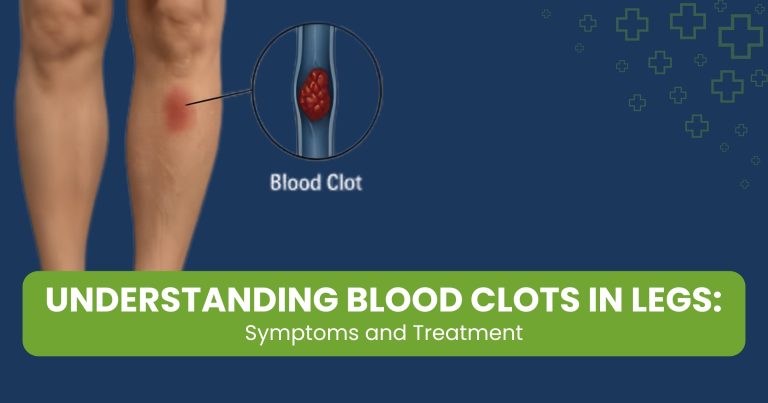
Blood clots in the legs can be deadly if not treated promptly. Deep Vein Thrombosis (DVT) is the condition in which clots form in the deep veins of the leg. Understanding warning signals and treatment options is critical for your health.
What Are Blood Clots in the Legs?
When platelets and proteins join, they form a thick mass called a blood clot. Clots can form in the legs if you stay still for extended periods, have certain medical conditions, or sustain a vein injury. If untreated, they can travel to the lungs and cause a life-threatening pulmonary embolism.
Common Signs and Symptoms
- One leg (or sometimes both) is swollen
- Skin that is red or discolored
- A warm feeling around the painful area
- Pain or tenderness that worsens when standing or walking
Common Locations for Blood Clots
Calf Area
The most common location. Blood clots in the calf cause dull, crampy pain and visible swelling.
Upper Leg or Thigh
A blood clot in the thigh usually produces more discomfort and edema, and may make the leg feel heavy or tight.
Groin
Causes discomfort, inflammation, and tightness around the upper thigh area.
Causes of Blood Clots
- Long periods of sitting or lying down
- Surgery or injury to the leg
- Hormonal changes (birth control or pregnancy)
- Smoking, obesity, or genetic clotting disorders
When to See a Doctor Immediately
Seek emergency care if you experience sudden shortness of breath, chest pain, rapid heartbeat, or coughing up blood — these may indicate a pulmonary embolism, a medical emergency.
Treatment Options
Medications
Blood thinners (anticoagulants) prevent the clot from getting bigger. Thrombolytics can help break up existing clots in serious cases.
Compression Therapy
Compression stockings help blood flow and reduce swelling associated with DVT.
Surgery
A thrombectomy (clot removal) or vena cava filter may be needed for large or dangerous clots.
Final Thoughts
Knowing the signs of blood clots in legs and getting medical help promptly could save your life. Palos Healthcare Center provides expert vascular and urgent care services to help you avoid, detect, and treat blood clots effectively.