
Women across the southwest suburbs often manage their own care around work, family, and everyone else's appointments. Searching for women's health near Palos Hills usually starts with a practical question: where can I be seen for a check-up, a symptom that will not go away, or something that came on today?
Palos Healthcare Center serves women in Palos Hills, Oak Lawn, Bridgeview, Worth, Hickory Hills, Orland Park, Palos Heights, and nearby communities. This guide explains what a preventive visit covers, which heart and vein symptoms deserve attention, and how to decide between scheduling a visit and seeking same-day care.
Quick Answer: What Does Local Women's Health Care Cover?
Locally, women's health generally covers preventive and wellness visits, management of ongoing conditions such as blood pressure or diabetes, evaluation of new symptoms, and referral or treatment for concerns that need focused attention. At Palos Healthcare Center that also includes cardiovascular evaluation and vein care, two areas where women's symptoms are frequently dismissed or attributed to something else.
This article is general health information. It does not replace a personal evaluation. If you have sudden chest pain, trouble breathing, fainting, one-sided weakness, trouble speaking, or heavy bleeding, call 911 or go to the nearest emergency department.
Preventive and Wellness Visits
A preventive visit is a scheduled appointment focused on your overall health rather than a single complaint. It is a useful time to review your medical history, medications, family history, and any changes you have noticed since your last visit.
What a wellness visit commonly includes
- Blood pressure, weight, and general vital signs
- A review of current medications, supplements, and allergies
- Discussion of family history, including heart disease and clotting disorders
- Questions about sleep, energy, mood, and stress
- Bloodwork when appropriate, such as cholesterol or blood sugar
- A conversation about which screenings apply to your age and history
Screening recommendations differ by age, personal history, and family history, and national guidelines are updated periodically. Rather than working from a general checklist, bring your history to the visit and ask which screenings apply to you now and which can wait. For background reading between visits, the CDC Office of Women's Health publishes current, plain-language guidance on screenings and preventive care.
If you are unsure whether a visit is covered, review accepted plans on our insurance information page before scheduling.
Heart Health Deserves Particular Attention
Heart disease is a leading cause of death among women in the United States, yet the warning signs women report are not always the ones people expect. Chest pressure is common, but many women also describe symptoms that are easy to attribute to stress, indigestion, or simple exhaustion.
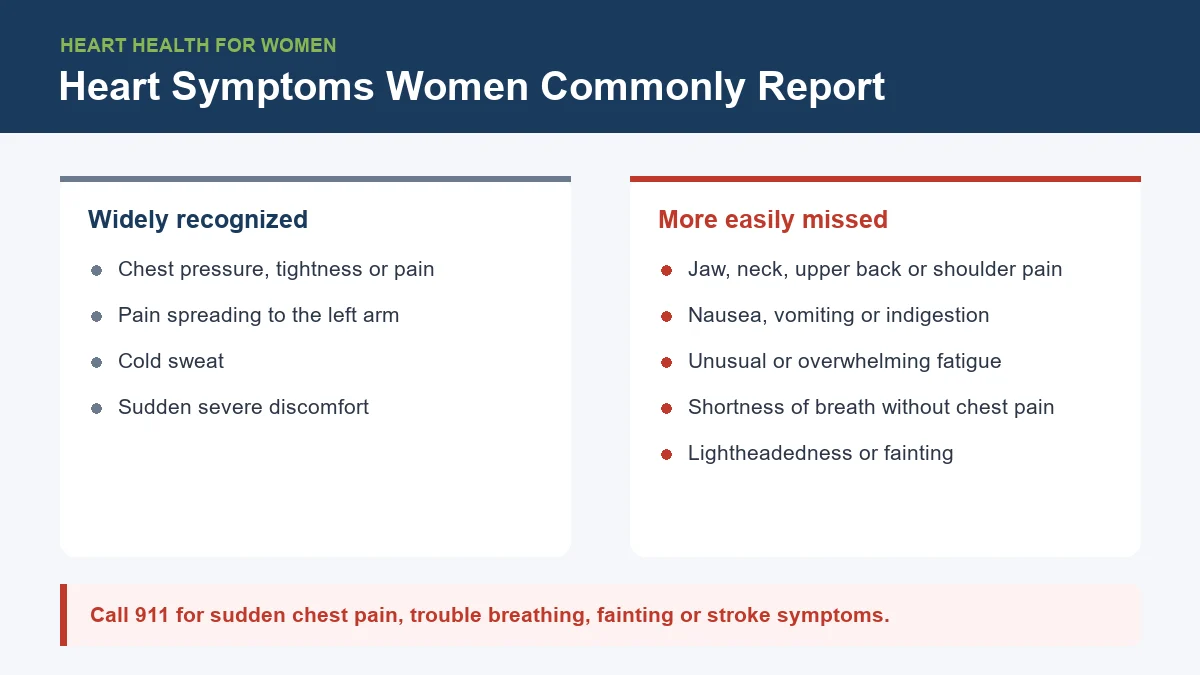
Symptoms in the second column are not less serious. They are simply less likely to be recognized as cardiac, by patients and sometimes by others around them. If these symptoms are new, worsening, or brought on by exertion, they are worth evaluating rather than waiting out.
Risk factors worth discussing
- High blood pressure, high cholesterol, or diabetes
- Smoking, current or past
- Family history of early heart disease
- Pregnancy complications such as preeclampsia or gestational diabetes
- Inflammatory or autoimmune conditions
- Menopause-related changes in cholesterol or blood pressure
Pregnancy history matters more than many women realize. Conditions that resolved after delivery can still signal longer-term cardiovascular risk, and they are worth mentioning even years later. Our cardiovascular healthcare services page outlines the evaluations available locally, and our guide to finding a cardiologist near me in Palos Hills explains what to expect from a first visit. For everyday habits that support heart health, see our heart health tips.
Vein and Leg Symptoms in Women
Vein problems are common in women, and pregnancy, hormonal changes, family history, and long hours standing or sitting all contribute. Varicose veins and spider veins are often treated as purely cosmetic, but aching, heaviness, swelling, night cramps, and skin changes can point to an underlying circulation problem worth evaluating.
Leg symptoms that deserve a closer look
- Aching or heaviness that worsens through the day
- Swelling in one or both legs, especially if new
- Bulging or rope-like veins
- Skin darkening around the ankle
- Restless legs or frequent night cramps
- A sore or wound near the ankle that is slow to heal
Swelling in a single leg, particularly with pain, warmth, or redness, should be evaluated promptly because it can indicate a blood clot. Our article on what causes swelling in one leg only covers this in more detail, and our guide to improving vein health explains habits that support circulation. Treatment options are described on our vein treatment page.
When Something Comes On Today
Not everything can wait for a scheduled appointment. Urinary symptoms, sore throats, rashes, sinus infections, minor injuries, and sudden illness are common reasons women seek same-day care rather than waiting several days.
Our urgent care services page describes the concerns commonly treated in an urgent care setting, and our guide on when to go to urgent care explains which situations belong in an emergency department instead. Extended Tuesday and Thursday evening hours exist specifically for patients who cannot leave work during the day.
Getting the Most From Your Visit
Women often report that symptoms were attributed to stress or fatigue before another cause was identified. Being specific and concrete helps, and so does describing how a symptom affects what you are able to do.
- Write down symptoms, when they started, and what makes them better or worse.
- Bring a current medication and supplement list, including doses.
- Mention pregnancy history, including complications, even from years ago.
- Share family history of heart disease, stroke, or blood clots.
- Say plainly which symptom worries you most, and ask what would need to happen for it to be taken further.
- Ask what the follow-up plan is and when you should return if things do not improve.
Local Access Across the Southwest Suburbs
Convenience determines whether care actually happens. For women balancing work, caregiving, and school schedules across Palos Hills, Oak Lawn, Bridgeview, Worth, Hickory Hills, Orland Park, and Palos Heights, a nearby clinic that handles preventive visits, heart and vein concerns, and same-day needs reduces the number of separate trips a single health question requires.
If you have been putting off a visit, or you have a symptom you have quietly worked around for months, that is a reasonable place to start. Contact Palos Healthcare Center to ask what to bring and how soon you can be seen.
Bottom Line
Local women's health care works best when preventive visits, heart risk, vein symptoms, and same-day concerns are handled by a team you can reach without a long wait. Bring your history, describe symptoms specifically, and ask which screenings apply to you now rather than assuming a general schedule fits your situation.
